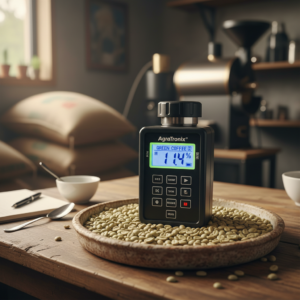
Measuring the moisture content of green coffee beans at Bold Mountain Coffee
From the cupping table at Bold Mountain Coffee
Ever wonder why some bags of coffee taste consistently amazing, while others are a gamble? The secret often lies in a factor you can’t see: the moisture content of green coffee beans.
At Bold Mountain Coffee, we obsess over every detail that shapes your cup—from origin and altitude to roast profile and brew method. But coffee bean moisture content quietly determines whether a coffee can ever live up to its potential long before it reaches the roaster.
Measuring moisture isn’t just a technical chore; it’s a cornerstone of quality, safety, and consistency. That’s why we test every lot of green coffee with an Agratronix Coffee Moisture Analyzer the moment it arrives at our roastery. From there, the coffee is stored in a strict, temperature‑ and humidity‑controlled environment. Our green beans are kept in an air‑conditioned space that never drops below 55°F or rises above 75°F, helping lock in their ideal moisture range and protect their flavor until the moment we roast.
Here’s why that matters.
1. Guarding Against Mold, Mycotoxins, and Flavor Defects
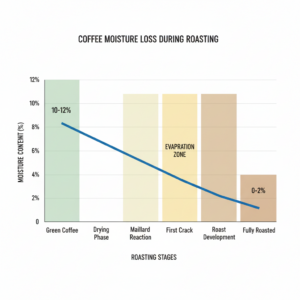
Green coffee is usually dried to a target range of 10%–12% moisture. Within that window, the beans are stable, safe, and ready for transport and storage.
Too high (above ~12.5%)
Beans with excess moisture become a breeding ground for mold and fungi. Beyond the musty, “baggy” flavors this creates, it also increases the risk of mycotoxins like Ochratoxin A, which are harmful to health.
Too low (below ~9%)
Over-dried beans lose structural integrity and age too quickly. The flavor becomes flat and woody, and the coffee can taste “old” long before its time.
At Bold Mountain Coffee, we use the Agratronix Coffee Moisture Analyzer on every incoming lot to confirm moisture is in that safe, sweet spot. If a coffee doesn’t meet our standards, we know it before it ever reaches our storage racks—and we can respond appropriately with our suppliers.
2. Consistent Roasts Begin With Consistent Moisture
Roasting is all about how heat moves through the bean. Water plays a critical role in that process.
- Higher moisture beans need more energy and time to drive off water before browning and caramelization really get going.
- Low moisture beans absorb heat too quickly, often racing through the roast curve and losing nuance.
If we took two bags of the exact same origin—one at 10.5% moisture and one at 12%—they would behave very differently in the roaster.
By checking each lot with our Agratronix meter, we know the exact moisture percentage for that coffee. Then we can:
- Adjust charge temperature (starting drum temperature)
- Shape our gas and airflow applications
- Fine‑tune the time to first crack and development time
This is one of the reasons you’ll notice that Bold Mountain Coffee tastes remarkably consistent from bag to bag: we aren’t guessing about what’s happening inside the bean.
3. Protecting Everyone’s Bottom Line
Coffee is sold by weight, and moisture directly affects that weight.
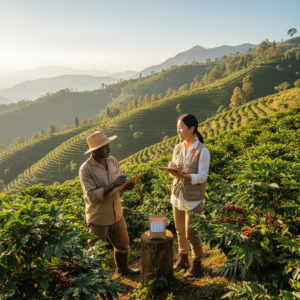
- For producers, drying too far below the ideal range means lost pounds of coffee (and therefore lost income) for every bag shipped.
- For roasters, buying coffee that’s too wet means paying coffee prices for excess water that simply evaporates during roasting.
By measuring with our Agratronix analyzer, we can:
- Verify that the moisture content matches what was agreed upon with our producers and importers.
- Accurately track shrinkage (how much weight is lost during roasting).
- Price our roasted coffee fairly while making sure we sustain long-term partnerships with growers.
It’s one of the quiet ways Bold Mountain Coffee supports both transparency and fairness in the supply chain.
4. Preserving the Character of Origin
What sets a great coffee apart are its origin-defining flavors: the citrus snap in a washed African coffee, the chocolate and nut notes in a Latin American lot, or the deep, earthy profile from certain Indonesian regions.
Those flavors are tied to the bean’s cellular structure and chemistry. Moisture affects both:
- If moisture is too high during storage or shipping, it can drive unwanted chemical changes and increase water activity, causing the coffee to fade.
- If it’s too low, delicate aromatic compounds degrade quickly, and the cup becomes dull.
By keeping an eye on moisture from the moment coffee enters our roastery, Bold Mountain Coffee helps ensure that the flavor you taste in the cup is true to the farm and region it came from.

5. What It Means for Your Cup
When you open a bag of Bold Mountain Coffee, you’re tasting more than just a roast profile—you’re tasting a chain of careful decisions:
- Farmers who dry their coffee to the right range.
- Importers who store and ship it under controlled conditions.
- And roasters (that’s us) who verify moisture content with an Agratronix Coffee Moisture Analyzer and store green coffee in a tightly controlled 55–75°F, air‑conditioned environment before adjusting every roast accordingly.
All of that care shows up as:
- Cleaner, more vibrant flavor
- Better balance between sweetness, acidity, and body
- A more consistent experience from bag to bag